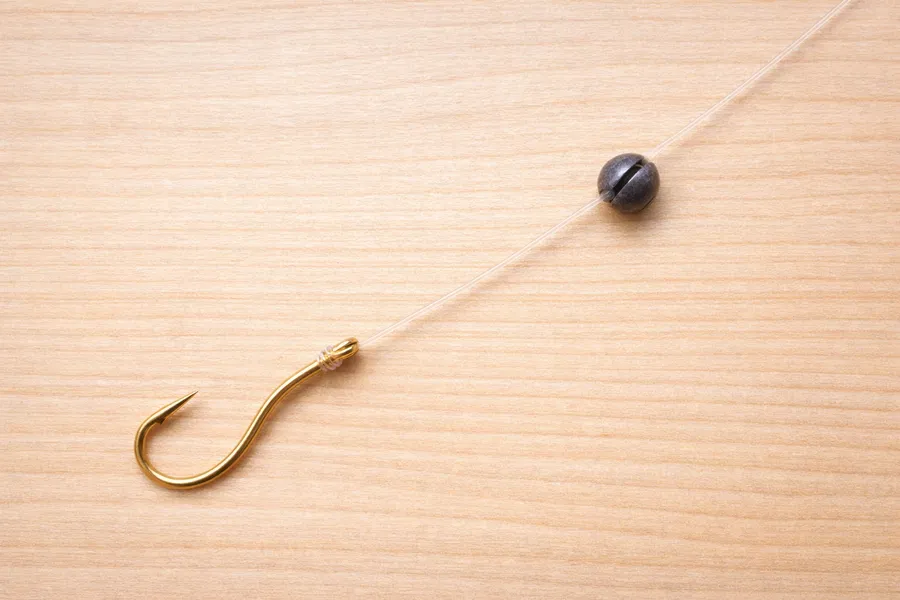

Tying your first fishing setup can feel more intimidating than casting. Hooks, weights, swivels, knots—it looks like a lot of small pieces that somehow need to work together perfectly.
In reality, a beginner setup is much simpler than it appears.
You don’t need complicated rigs, advanced knots, or a dozen accessories. What you need is a secure hook, the right amount of weight, and a clear understanding of how everything connects. When tied correctly, even the simplest setup can catch fish consistently.
This guide walks you through how to tie your first fishing setup step by step, focusing only on what beginners actually need—nothing extra, nothing confusing.
Why Tying a Simple Setup Matters More Than Fancy Rigs#
It’s easy to assume that better results come from more complex rigs. But for beginners, complexity usually creates more problems than it solves.
Simple setups are easier to cast, easier to manage, and easier to fix if something goes wrong. When a rig has fewer components, it’s also easier to understand what’s happening underwater.
A well-tied basic setup teaches more about fishing than a complicated arrangement ever could. It allows you to focus on presentation, patience, and timing instead of constantly adjusting hardware.
Learning starts with clarity. And clarity starts with simplicity. If you want to see how this basic rig fits into the bigger beginner roadmap — from choosing gear to landing your first fish — the full Fishing Basics Guide connects each step in order.
What You Need Before You Start#
Before tying anything, take a minute to choose components that match your rod, reel, and line. Beginner setups work best when everything stays proportional. Oversized hooks and heavy weights don’t make fishing easier—they usually make it clumsier.
Keep it simple. Keep it balanced.
Choosing the Right Hook Size#
Hook size should match both your bait and the fish you’re targeting. Beginners often assume bigger hooks mean bigger fish. In practice, oversized hooks reduce bite rates and make bait presentation look unnatural.
For general freshwater fishing, small to medium hooks are usually more versatile. They hold worms, soft plastics, and small bait effectively without overwhelming the setup.
A good rule: the hook should look natural with the bait, not dominate it.
Selecting Basic Weights#
Weights help your bait sink and stay where fish can find it. For beginners, simple split shot weights or small sliding sinkers are usually enough.
Heavier isn’t always better. Too much weight makes casting awkward and reduces sensitivity. Use only enough to keep your bait where you want it—no more.
Starting light allows better feel and easier control.
When to Use a Swivel (and When You Don’t Need One)#
Swivels help prevent line twist, especially when using lures that spin or when retrieving frequently. They’re useful—but not mandatory in every setup.
For simple bottom fishing with natural bait, a swivel can help keep things organized and reduce tangles. But if your line isn’t twisting and your setup is straightforward, you can fish without one.
Beginners benefit from understanding what each component does before adding it automatically.
The Simplest Beginner Fishing Setup (Step-by-Step)#
This setup is intentionally basic. It’s designed for learning, not impressing anyone at the dock.
A hook, a small weight, and a secure knot. That’s enough to catch fish in ponds, lakes, and slow-moving rivers.
Step 1: Tie the Hook to Your Line#
Thread the end of your line through the eye of the hook.
For beginners, a simple improved clinch knot works well. It’s strong, reliable, and easy to learn. Wrap the line around itself several times, feed the tag end back through the loop near the hook eye, then tighten slowly while holding the hook steady.
Before fully tightening, wet the knot slightly with water or saliva. This reduces friction and helps it seat properly.
Trim the excess line cleanly so it doesn’t interfere with your presentation.
Step 2: Add the Weight Correctly#
Attach a small split shot weight above the hook on the main line.
Pinch it gently into place using pliers or firm finger pressure. Avoid crushing the line—secure is good, smashed is not.
If you’re using a sliding sinker instead, thread it onto the line before tying the hook, then let it rest freely above the hook.
Step 3: Adjust Distance Between Hook and Weight#
The distance between the hook and weight affects how your bait behaves in the water.
For simple bottom fishing, placing the weight 6 to 12 inches above the hook is a safe starting point. This keeps the bait close to the bottom while allowing natural movement.
If the water is shallow or calm, shorter spacing often works well. In slightly deeper water, increasing the distance can improve presentation.
Keep it simple at first. You can adjust later based on what you observe.
Step 4: Check Your Knot and Tension#
Before casting, pull firmly on the line to test the knot. It should tighten smoothly and not slip.
Look closely at the hook eye. The knot should sit neatly without crossing over itself or bunching awkwardly.
A quick tension check prevents most beginner failures. If something feels questionable, retie it. Confidence in your setup matters more than saving thirty seconds. Once your rig feels secure, the next step is learning how to cast a fishing rod for beginners so the setup actually lands where you intend.
How to Add a Swivel to Prevent Line Twist#
Swivels are small, simple components—but they can save beginners a lot of frustration.
You don’t always need one. But when line starts twisting, coiling, or behaving unpredictably, a swivel often fixes the problem faster than changing anything else.
When Line Twist Becomes a Problem#
Line twist usually shows up as coils forming above your reel or slack line spinning on itself.
It’s common when:
- using spinning lures
- reeling in against resistance
- casting repeatedly without tension
- or closing the bail by cranking instead of by hand
If your line starts to loop aggressively when it hangs loose, twist may be building up. That’s when a swivel becomes useful.
How to Tie a Swivel Properly#
Tying a swivel is similar to tying a hook.
Thread the line through one end of the swivel and use a simple knot like the improved clinch knot. Tighten it carefully and trim the tag end cleanly.
If you’re adding a leader line below the swivel, tie the leader to the other end the same way.
Keep knots neat and compact. Large or sloppy knots can catch on guides during casting.
Where It Should Sit in Your Setup#
In a simple beginner setup, the swivel usually sits between your main line and a short leader.
That means:
- main line from reel → swivel
- swivel → short leader line → hook
This placement allows the swivel to rotate freely and absorb twisting motion before it reaches your reel.
For basic bottom fishing with live bait, placing the swivel 12 to 24 inches above the hook works well. For float setups, the swivel often sits just above the leader section.
Swivels aren’t magic—but when placed correctly, they quietly solve one of the most common beginner problems.
Common Beginner Mistakes When Tying a Setup#
Most beginner problems don’t come from bad luck. They come from small decisions that seem logical at first but create avoidable frustration.
The good news is that these mistakes are easy to correct once you recognize them.
Tying Knots Too Complicated Too Soon#
It’s tempting to learn five different knots right away. But complexity doesn’t equal strength.
Beginners benefit more from mastering one reliable knot than half-learning several advanced ones. A well-tied simple knot is stronger than a poorly tied “pro-level” knot.
If you can tie it confidently without thinking, it’s the right knot for now.
Using Hooks That Are Too Large#
Oversized hooks are one of the most common beginner errors.
Large hooks look powerful, but they often reduce bites—especially with small or natural bait. They can also affect casting balance and presentation.
Matching hook size to bait size creates a more natural appearance underwater. Subtle usually works better than oversized.
Placing Weight in the Wrong Spot#
Weight placement changes how bait behaves.
If the weight is too close to the hook, the bait can look stiff and unnatural. If it’s too far away, casting control may suffer.
A small adjustment of just a few inches can improve how the setup feels and performs. Beginners often forget that these small changes matter more than adding new gear.
Simple setups work best when each part has room to function naturally.
A Basic Setup That Works Almost Everywhere#
When you’re starting out, you don’t need five different rigs. You need one setup that works often enough to build confidence.
These two simple variations cover most beginner situations without adding complexity.
Simple Bottom Fishing Setup#
This is one of the most reliable beginner setups.
Tie your hook to the end of the line. Add a small split shot weight 6 to 12 inches above the hook. If line twist becomes noticeable, place a swivel above a short leader section.
Cast it out and let the weight settle on the bottom. The bait will rest naturally nearby, moving slightly with water motion.
It’s easy to cast, easy to retie, and easy to adjust. For ponds, lakes, and slow-moving rivers, this setup consistently produces results.
Simple Float Setup for Calm Water#
For shallow or calm water, a float (bobber) setup adds visibility and control.
Attach a float to the main line. Tie the hook at the end. Place a small weight a few inches above the hook to help the bait sink naturally beneath the float.
Adjust the float depth depending on how deep you want the bait to sit.
This setup is especially beginner-friendly because it gives visual feedback. When the float moves or dips, you know something is happening.
Tying your first fishing setup doesn’t require advanced rigs or complicated knots. A secure hook, the right amount of weight, and a clear connection between components are enough to start catching fish.
Fishing rewards simplicity more often than complexity. Learn one clean setup. Tie it well. Trust it.
As your experience grows, you’ll naturally explore new variations. But the foundation—the ability to tie a basic, reliable setup—will always remain the most valuable skill.