

Affiliate disclosure: As an Amazon Associate, we may earn from qualifying purchases made via links on this page - at no extra cost to you. See our Affiliate Disclosure.
When you’re just starting out in the world of fishing, the gear can feel as confusing as trying to untangle a mess of fishing line. One of the most important pieces of equipment you’ll come across is the spinning reel, and a key feature that often leaves beginners scratching their heads is the gear ratio. It’s like the secret sauce that determines how quickly you can retrieve your line.
In this article, we’ll break down the differences between popular gear ratios - 5.6:1, 6.2:1, and 7.0:1 - without overwhelming you with technical jargon. Think of it as choosing between a leisurely stroll, a brisk walk, and a light jog. Each option has its own perks, depending on what you’re fishing for and how you like to fish. So grab your favorite beverage, settle in, and let’s simplify the spinning reel gear ratio so you can feel confident on your next fishing adventure!
Why Gear Ratio Confuses So Many Anglers#
When it comes to choosing a spinning reel, the gear ratio can feel like a secret code that only seasoned anglers understand. With numbers like 5.6:1, 6.2:1, and 7.0:1 floating around, it’s easy to get lost in the technical jargon. Many beginners find themselves scratching their heads, unsure of how these ratios impact their fishing experience. In reality, gear ratio is all about how quickly you can retrieve your line, and understanding it can make a significant difference in your success on the water. Let’s break it down in simple terms.
What those numbers on a reel actually mean#
When you hear terms like 5.6:1, 6.2:1, or 7.0:1, you might wonder what they really signify. These numbers represent the gear ratio of a spinning reel, which tells you how many times the spool rotates with each turn of the handle. For example, a 5.6:1 gear ratio means that for every full turn of the handle, the spool turns 5.6 times.
At first glance, these numbers might seem confusing, but they help you understand how quickly you can retrieve your line. A higher ratio, like 7.0:1, means faster line retrieval, which is great for techniques that require quick reeling, like jerkbait fishing or when you need to keep up with a fast-moving fish. On the flip side, a lower ratio, like 5.6:1, is often better for techniques that require more torque, such as when you’re using heavier lures or targeting larger fish.
Think of it this way: if you’re fishing in a situation where you need to bring your bait back quickly (like in fast-moving waters or for species that hit hard and run), a reel with a higher gear ratio will help you keep up. Conversely, if you’re using heavier lures or fishing deep, a lower gear ratio can give you more control when reeling in.
As you explore different gear ratios, consider what kinds of fishing you enjoy most and what techniques you’ll be using. This will help you choose the right gear ratio for your needs, making your time on the water more efficient and enjoyable.
Why higher isn’t always better#
When you hear anglers talking about gear ratios, it’s easy to think that a higher number always means a better reel. After all, who wouldn’t want to crank in fish faster? But the reality is a bit more nuanced.
A higher gear ratio, like 7.0:1, means that for every turn of the handle, the spool rotates more times, allowing for quicker line retrieval. This can be fantastic when you need to reel in fast, like when a fish makes a sudden dash or when you’re working topwater lures that require a quick action. However, it’s not always the best choice for every scenario.
With faster gear ratios, you also need to consider the trade-offs. They typically require more effort to turn, which can be exhausting over long periods, especially if you’re targeting fish that demand a lot of cranking, like bass or pike. If you’re casting for hours, a reel with a slightly lower gear ratio, like 5.6:1, might feel smoother and less tiring.
Another thing to think about is the type of fishing you’re doing. If you’re targeting species that require finesse, like trout or panfish, a lower gear ratio often offers better control. It allows you to work lures with precision and maintain a steady, controlled retrieve.
So, while a higher gear ratio can sound appealing, it’s essential to match the reel’s capabilities with your fishing style and the species you’re targeting. There’s a sweet spot for every angler, and sometimes, lower is just what you need.
How Spinning Reel Gear Ratios Work#
Understanding gear ratios is essential for making the most of your spinning reel. The gear ratio, represented by numbers like 5.6:1 or 7.0:1, indicates how many times the spool rotates for each turn of the handle. This simple number can greatly influence your fishing experience, affecting how quickly you can retrieve your line and how efficiently you can fight a fish. By grasping the basics of gear ratios, you’ll be better equipped to select the right reel for your fishing style and the species you’re targeting.
Understanding spool rotations and line retrieval#
When we talk about spinning reel gear ratios, the key is to understand how many times the spool rotates with each turn of the handle. This is where the numbers like 5.6:1, 6.2:1, and 7.0:1 come into play. The first number tells you how many times the spool spins for every complete turn of the handle. So, a 6.2:1 gear ratio means the spool rotates 6.2 times for every crank of the handle.
This rotation impacts how much line you retrieve with each turn. For instance, a reel with a 5.6:1 ratio will get you a bit less line per turn compared to a 7.0:1 reel. If you’re fishing in an area with fast-moving fish, like bass or pike, a higher gear ratio can help you bring in fish quickly. On the other hand, if you’re targeting species that require a more measured approach, like walleye, a lower gear ratio might be more suitable as it allows for better control.
The amount of line retrieved also depends on the spool’s diameter. A larger spool can take in more line with each rotation, regardless of the gear ratio. So, when choosing a reel, consider both the gear ratio and the spool size to find the right fit for your fishing style.
In practical terms, if you’re casting and reeling in quickly, a higher gear ratio can make your life easier. You’ll spend less time cranking and more time focusing on your next cast. Conversely, if you’re working a lure slowly through the water, a lower gear ratio can give you the precision you need. Balancing these factors will help you find the right spinning reel for your fishing adventures.
The difference between gear ratio and inches per turn#
When you hear a spinning reel’s gear ratio, it might sound a bit technical at first. But really, it’s just a way to understand how quickly your reel picks up line when you turn the handle. For example, a gear ratio of 5.6:1 means that for every complete turn of the handle, the spool rotates 5.6 times, bringing in a good amount of line.
Now, let’s break this down a bit further. The gear ratio tells you how many times the spool turns relative to the handle. Higher gear ratios, like 7.0:1, mean the spool turns faster, allowing you to retrieve line more quickly. This can be useful when you’re working with fast-moving lures or when you need to reel in a fish quickly to avoid losing it.
But what about inches per turn? This is where things get a bit more nuanced. While gear ratio tells you how many turns the spool makes, inches per turn tells you how far your line comes in with each turn of the handle. This measurement depends on the spool’s diameter and line capacity. So, a reel with a high gear ratio might not necessarily bring in more line with each turn if its spool diameter is smaller.
For instance, if you have two reels with the same gear ratio but different spool diameters, the one with the larger spool will generally retrieve more line per turn. Understanding both of these measures is crucial when choosing the right reel for your fishing style. If you’re targeting fast fish or working with specific lures, consider both the gear ratio and the inches per turn to ensure you have the right setup for the job.

What a 5.6:1 Gear Ratio Is Best For#
When it comes to spinning reels, the gear ratio plays a crucial role in determining how quickly you can retrieve your line. A 5.6:1 gear ratio strikes a balance between speed and power, making it an excellent choice for various fishing scenarios. This ratio is especially beneficial for anglers targeting species that require steady retrieves or when fishing in deeper waters, where you may need to maintain better control over your bait. Understanding when to use this gear ratio can help enhance your fishing experience and improve your success on the water.
Power-focused techniques and slower presentations#
When you’re looking at a spinning reel with a gear ratio of 5.6:1, think of it as a tool built for power rather than speed. This is particularly beneficial when you’re using techniques that require more torque and control. For example, if you’re fishing in heavy cover or targeting larger species, this gear ratio gives you the strength to reel in those tough fighters without straining your line or equipment.
One common scenario where a 5.6:1 gear ratio shines is when you’re using jigs or soft plastics. These techniques often involve slow, methodical presentations that require you to feel subtle bites and make precise movements. A slower gear ratio allows for better control over your lure, making it easier to keep it in the strike zone longer. It’s about giving the fish enough time to take the bait without rushing the action.
Additionally, if you find yourself fishing in deeper waters or using heavier baits, this gear ratio can be a real asset. It allows you to pull up heavier weights with ease, making it perfect for bottom fishing or targeting species like bass and catfish that tend to stay closer to the structure. The extra power means you can maintain a steady retrieve while still engaging the fish effectively.
So if you’re gearing up for a day on the water with a focus on power-focused techniques and slower presentations, a spinning reel with a 5.6:1 gear ratio could be just what you need to enhance your fishing experience.
Situations where torque matters more than speed#
When you’re out fishing, there are times when you need a bit more muscle to handle the situation. That’s where a 5.6:1 gear ratio comes into play. This ratio gives you a good balance of torque and speed, making it ideal for certain types of fishing.
For example, if you’re targeting larger fish like bass or pike, the extra torque helps you reel them in more effectively. These fish often make powerful runs, and having that additional pulling power can make all the difference. You want to ensure you can set the hook firmly and keep tension on the line, especially when they’re fighting hard.
Another situation where a 5.6:1 gear ratio shines is when you’re using heavier lures or baits. When you’re casting out a big crankbait or a heavier jig, the added torque helps you retrieve your tackle more efficiently. You’ll find that it feels more manageable, allowing you to fish longer without tiring out your arm.
Additionally, if you’re fishing in heavy cover, like thick weeds or around submerged rocks, you need to be able to pull fish out without losing them. The 5.6:1 gear ratio gives you that power to yank fish free from snags, which can be crucial in those tricky spots.
In sum, if your fishing adventures often involve battling hefty fish or working with heavier tackle, a spinning reel with a 5.6:1 gear ratio is a solid choice. It offers the torque you need to handle those challenges effectively.

When a 6.2:1 Reel Becomes the Most Versatile Choice#
When it comes to choosing a spinning reel, the gear ratio is a crucial factor that can significantly influence your fishing experience. A 6.2:1 reel strikes a balance between speed and power, making it a versatile option for a variety of fishing scenarios. Whether you’re targeting swift species like bass or working the depths for more sluggish fish, this gear ratio offers the flexibility to adapt your technique on the fly. Understanding when and why to use a 6.2:1 reel can enhance your effectiveness on the water, helping you to reel in more catches with confidence.
Why many anglers consider it the sweet spot#
When it comes to choosing gear ratios for spinning reels, many anglers find themselves gravitating toward the 6.2:1 option. This ratio strikes a balance that makes it suitable for various fishing situations, which is why it’s often dubbed the “sweet spot.”
With a 6.2:1 gear ratio, you can retrieve line at a decent speed without sacrificing too much torque. This means you can easily reel in fish quickly, which is great for aggressive species like bass or pike. At the same time, you have enough power to manage larger fish or those that make powerful runs and dives.
One of the key advantages of a 6.2:1 reel is its versatility. Whether you’re flipping lures into cover, casting spoons, or working jigs, this gear ratio allows for a smooth and responsive retrieve. It’s a great all-rounder, making it ideal for both freshwater and saltwater applications. If you’re fishing in varied conditions or targeting different species, this reel can adapt to your style without needing to switch setups constantly.
Another reason many anglers favor the 6.2:1 gear ratio is the ease of use. It’s beginner-friendly, providing enough speed to keep things exciting while also allowing for controlled retrieves. If you’re still honing your skills, this can help you focus on technique rather than managing a complex gear ratio.
Plus, the 6.2:1 ratio often pairs well with a variety of line types and sizes, meaning you can experiment with different setups without worrying about compatibility. Whether you prefer braid, monofilament, or fluorocarbon, this gear ratio can handle it all.
In essence, the 6.2:1 spinning reel offers a blend of speed, power, and versatility that resonates with both novice and experienced anglers alike. It’s an excellent choice if you’re looking to simplify your gear while still having the capability to tackle a range of fishing scenarios.
Freshwater and inshore applications#
When you think about a 6.2:1 gear ratio, picture versatility. This ratio strikes a balance between speed and power, making it a great choice for various fishing situations. Whether you’re casting for bass in a local lake or targeting redfish in shallow coastal waters, a 6.2:1 reel can handle it all.
In freshwater, this gear ratio allows you to quickly retrieve lures like spinnerbaits or crankbaits. You can cover more water efficiently, which is key when you’re trying to find active fish. The smoothness of the reel at this ratio also helps when you need to adjust your speed to match the fish’s mood. If they’re feeling aggressive, you can speed up your retrieve; if they’re being shy, a slower approach is just as easy.
When you’re fishing inshore, the 6.2:1 reel shines when you’re dealing with a variety of species. It has enough speed to catch up with fast-moving fish, but it also provides the torque needed for pulling stubborn fish from structure. Whether you’re working topwater plugs or jigging for flounder, this gear ratio gives you the versatility to switch techniques without changing your setup.
Additionally, the 6.2:1 gear ratio is forgiving for beginners. If you’re still getting the hang of timing your hook sets or managing line tension, this reel can help you feel more in control. It allows for a bit more margin for error, so you won’t feel overwhelmed by having to match a very specific speed or technique.
In essence, a 6.2:1 spinning reel is a reliable companion in both freshwater lakes and inshore coastal waters, making it a solid choice for anglers who want flexibility in their fishing adventures.
What a 7.0:1 Gear Ratio Does Better Than Lower Ratios#
When it comes to choosing a spinning reel, the gear ratio plays a crucial role in how well you can handle different fishing scenarios. A 7.0:1 gear ratio is often seen as a standout option, particularly for anglers looking for speed and efficiency. This higher ratio allows you to retrieve your line more quickly, which can be beneficial when you need to react to fast-moving fish or when you’re working with techniques that require a rapid retrieve. Understanding what this ratio can do for you can help elevate your fishing game, making it easier to land those elusive catches.
Fast-moving lures and reaction fishing#
When it comes to fishing with fast-moving lures, a 7.0:1 gear ratio shines. This high-speed ratio allows you to quickly retrieve your line, making it easier to keep your lure moving at the desired speed. Whether you’re using buzzbaits, spinnerbaits, or topwater plugs, a quicker retrieve can trigger aggressive strikes from fish that are actively feeding.
Imagine you’re working a topwater lure, skimming it across the surface. With a 7.0:1 gear ratio, you can whip that lure back in quickly, creating a frantic splashing action that fish can’t resist. This is particularly effective in warmer months when fish are more likely to chase down fast-moving prey.
Additionally, when you’re reaction fishing - where the goal is to provoke an immediate response from the fish - speed becomes crucial. A 7.0:1 reel allows you to cover more water in less time. This means you can cast out, reel in, and cast again rapidly, keeping your lure in front of potential targets.
In situations like these, the ability to quickly change your retrieve speed can make a big difference. If you notice fish aren’t biting, you can speed up your retrieve or even pause for a moment to tease them. The flexibility offered by a high gear ratio lets you adapt your technique on the fly, increasing your chances of a successful catch.
So, if you’re planning to fish with fast-moving lures, consider reaching for that 7.0:1 spinning reel. It’s designed for action, helping you make the most of those moments when fish are on the hunt.
Quickly recovering slack line#
A 7.0:1 gear ratio in a spinning reel means that for every complete turn of the handle, the spool rotates seven times. This high gear ratio is particularly handy when you need to quickly recover slack line.
Imagine you’re fishing and you’ve just cast your line out. If a fish starts to nibble, you want to be able to react without delay. With a 7.0:1 gear ratio, you can reel in the slack quickly, which helps you stay connected to the fish. This is especially useful in situations where fish are being finicky or are only giving short bites.
When you’re working a lure or bait, you often need to keep the line tight. A faster gear ratio allows you to pull in the line more efficiently, so you can keep that tension. This can make all the difference when a fish bites, giving you a better chance of setting the hook properly.
Additionally, if you’re fishing in heavy cover or near structures, being able to recover line quickly can help you maneuver your lure or bait out of snags and into the strike zone again. The quicker you can get that line back tight, the better your chances of enticing a fish to bite.
Overall, a 7.0:1 gear ratio gives you the edge in responsiveness, particularly in situations where timing is everything. It lets you adapt on the fly and react to what’s happening in the water, which can lead to more successful fishing trips.

Comparing 5.6:1 vs 6.2:1 vs 7.0:1 in Real Fishing Situations#
When you’re out on the water, the gear ratio of your spinning reel can make a significant difference in how effectively you can fish. Whether you’re targeting bass in a quiet lake or casting for trout in a river, each gear ratio brings its own strengths to the table. In this section, we’ll break down how the 5.6:1, 6.2:1, and 7.0:1 gear ratios perform in real-world scenarios, helping you understand which option might suit your fishing style best.
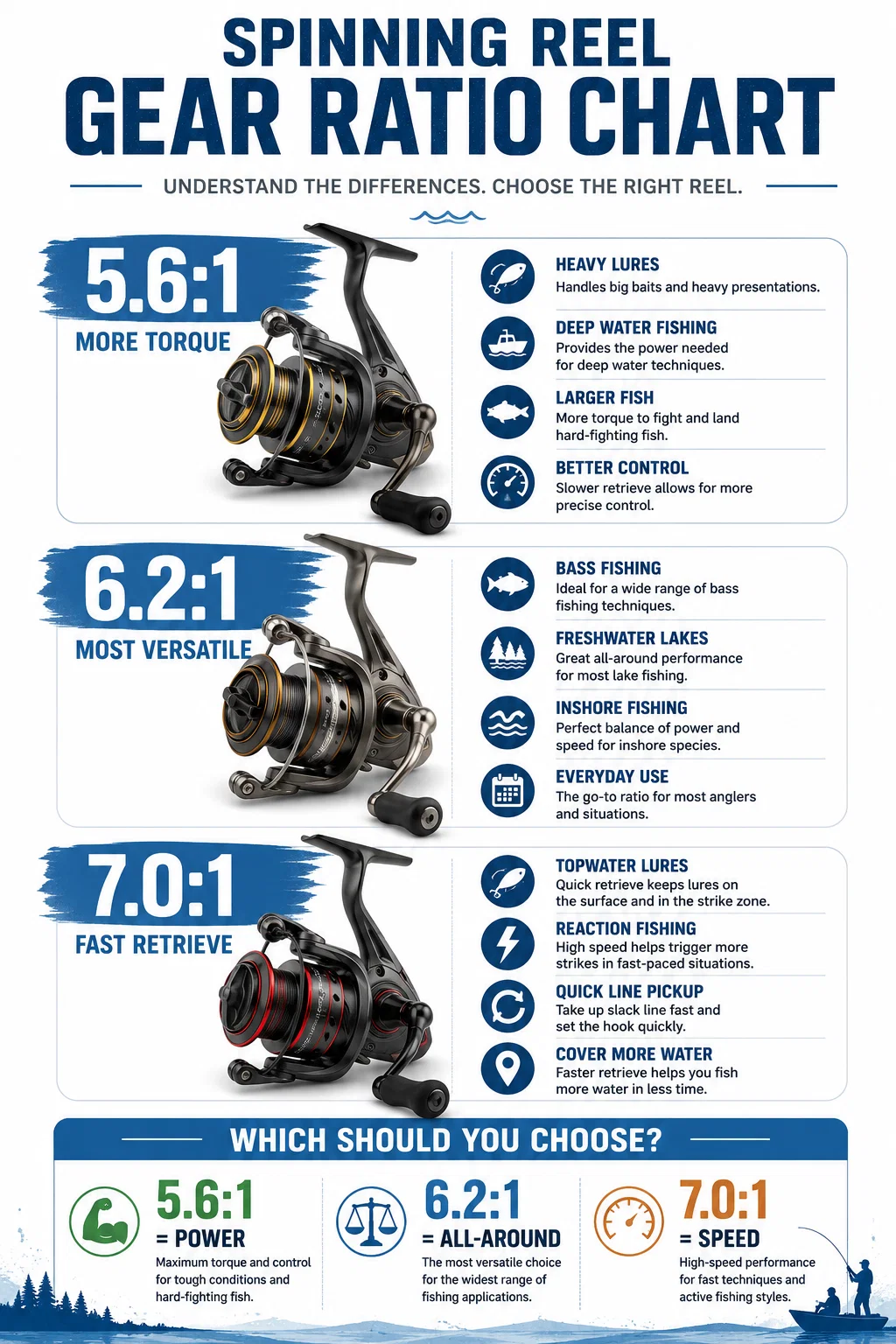
| Gear Ratio | Retrieve Speed | Best For | Main Advantage |
|---|---|---|---|
| 5.6:1 | Slow | Jigs, deep fishing, larger fish | More torque and control |
| 6.2:1 | Medium | Most freshwater and inshore fishing | Best all-around choice |
| 7.0:1 | Fast | Topwater lures, reaction fishing | Quick line pickup |
Bass fishing#
When it comes to bass fishing, the gear ratio of your spinning reel can make a significant difference in your success on the water. Let’s break down how each of the gear ratios - 5.6:1, 6.2:1, and 7.0:1 - affects your approach.
Starting with the 5.6:1 gear ratio, this reel retrieves line more slowly. It’s perfect for techniques where you want to present your lure gently, like when you’re using soft plastics or fishing in heavy cover. The slower retrieval allows you to feel the subtle bites and gives you more control over your lure’s action. If you’re fishing in thick vegetation or near structures, a 5.6:1 can help you maintain that delicate presentation without spooking the fish.
Moving up to the 6.2:1 gear ratio, this is a versatile choice that balances speed and sensitivity. It’s great for a variety of bass fishing techniques. Whether you’re cranking a spinnerbait or working a jig, this ratio gives you the ability to pick up line quickly while still feeling the fish as they nibble at your bait. It’s a solid middle ground, making it suitable for both beginners and seasoned anglers looking for an all-around reel.
Now, if you’re after speed, the 7.0:1 gear ratio is your go-to. This reel retrieves line quickly, which can be beneficial when you’re trying to cover a lot of water or when using fast-moving lures like topwaters or crankbaits. The higher gear ratio allows you to reel in slack quickly after a cast, enabling you to be more responsive to bites. However, keep in mind that with greater speed comes less finesse, so it may not be the best choice for all situations.
In summary, your choice of gear ratio should align with your fishing style and the specific conditions you’re facing. A slower ratio can help in tight spots, a medium ratio offers versatility, and a faster ratio lets you cover ground quickly. Understanding how these ratios work in practice can help you make more informed decisions for successful bass fishing outings.
Trout and finesse techniques#
When targeting trout, especially in streams or lakes, finesse techniques are often the way to go. This is where gear ratios come into play. A 5.6:1 gear ratio might seem a bit slower, but it can be perfect for delicate presentations. This slower retrieve allows you to work baits more softly, which is crucial when trout are spooked or when they’re feeding on small insects near the surface.
On the other hand, a 6.2:1 gear ratio strikes a nice balance. It offers a bit more speed while still allowing for accurate drops and subtle movements. This can be especially useful when you want to cover more water but still need to keep that finesse. You can quickly reel in line after a cast, making it easier to adjust your bait’s position without losing that gentle touch.
Now, a 7.0:1 gear ratio is fast and can be a great choice when you’re using techniques like twitching or yo-yoing lures. This higher speed lets you quickly retrieve a lure, making it more enticing to active trout. If you’re casting spinners or crankbaits and want to cover a lot of ground, this is the way to go. Just keep in mind that with speed comes the need to maintain control, as trout can be finicky.
In practice, think about where and how you’re fishing. If you’re in a clear stream and the trout are cautious, a 5.6:1 might be your best bet. But if you’re in a wider lake or a spot where the trout are more aggressive, bumping up to a 6.2:1 or even 7.0:1 could turn those bites into hookups. Adjust your choice based on conditions and the behavior of the fish you’re after.
Saltwater applications#
When it comes to saltwater fishing, choosing the right gear ratio for your spinning reel can make a huge difference in your experience. Let’s break down how 5.6:1, 6.2:1, and 7.0:1 gear ratios perform in real fishing situations.
Starting with the 5.6:1 gear ratio, this lower speed option is often ideal for targeting larger species like grouper or snapper. The slower retrieve allows you to effectively work heavier lures or bait, which is essential when dealing with the strong currents often found in saltwater environments. It also gives you more torque, making it easier to reel in stubborn fish that put up a fight.
Next up is the 6.2:1 gear ratio. This is a versatile choice that finds a sweet spot between speed and power. It’s great for general saltwater fishing, whether you’re chasing striped bass or jacks. This ratio allows you to cover ground without sacrificing the necessary power to handle larger fish. If you’re using lighter lures, the 6.2:1 lets you retrieve them quickly, which can trigger strikes from aggressive feeders.
Finally, the 7.0:1 gear ratio brings speed to the table. This is perfect for situations where you want to quickly reel in line, such as when you’re working fast-moving jigs or when fishing in areas with lots of structure. The faster retrieve can be particularly effective when targeting species like tuna or mahi-mahi that are known for their quick bursts of speed. However, be mindful that with this gear ratio, you may need to adjust your technique, as the faster retrieve can make it easier to pull your bait away from a fish before it has a chance to take it.
In saltwater fishing, each gear ratio has its strengths. Consider the species you’re targeting, the type of lures or bait you’re using, and the conditions you’ll be fishing in. This way, you can select the gear ratio that best suits your needs, giving you a better chance of landing that big catch.
Common Gear Ratio Mistakes Beginners Make#
When you’re just starting out with spinning reels, the gear ratio can feel like a puzzling concept. Many beginners overlook its significance or misunderstand what different ratios mean for their fishing experience. Understanding gear ratios is crucial for matching your reel to your fishing techniques and target species. Let’s explore some common missteps to help you make more informed choices and enhance your time on the water.
Buying the fastest reel available#
When beginners dive into fishing, it’s easy to get caught up in the excitement of gear. One common mistake is thinking that the fastest spinning reel is always the best choice. Sure, a higher gear ratio means you can retrieve your line quicker, but that’s not the whole story.
For instance, if you’re targeting species like bass or trout, a 7.0:1 reel might seem appealing because it promises to haul in fish at lightning speed. However, if you’re fishing in heavy cover or doing more finesse techniques, you might find that you’re sacrificing control for speed. A lower gear ratio, like 5.6:1, can give you more torque, which is crucial when you’re trying to pull a fish out of thick weeds or when you need to work a bait slowly.
Consider the type of fishing you’ll be doing. If you’re casting lures or working with lighter baits, a faster reel could help you cover more water. But if you’re bottom fishing or using heavier lures, a slower reel can provide better handling and more power when you hook a fish.
Additionally, think about your comfort and skill level. Faster reels can require quicker retrieves, which might not be suitable for every angler, especially those just starting out. If you find yourself struggling to keep up with a 7.0:1 reel, you might miss out on important bites or get fatigued more quickly.
Ultimately, the best gear ratio for you depends on your fishing style and preferences. Take the time to consider what you’ll be doing on the water rather than simply opting for the fastest option. Sometimes, a balanced approach with a mid-range gear ratio can be the key to a successful and enjoyable fishing experience.
Ignoring lure type and fishing style#
One of the biggest mistakes beginners make when choosing a gear ratio for their spinning reel is overlooking the type of lure they plan to use and their specific fishing style. The gear ratio affects how quickly you can retrieve your lure, which can be crucial depending on what you’re targeting.
For example, if you’re fishing with fast-moving lures like spinnerbaits or jerkbaits, a higher gear ratio, such as 7.0:1, can be advantageous. This allows you to quickly bring in the line and keep the lure moving at the speed the fish prefer. On the other hand, if you’re using slower presentations like jigs or soft plastics, a lower gear ratio, like 5.6:1, might be more effective. This lets you maintain better control and feel the subtle bites.
Consider your fishing scenario: Are you casting into a river with current, or are you fishing a calm lake? Fast retrieves can help you cover more ground in open water, while slower retrieves allow for more precise presentations in structure-heavy areas. Matching your gear ratio to your lure type and fishing style will not only enhance your effectiveness but also make your time on the water more enjoyable.
Remember, it’s not just about the numbers; it’s about how you fish. Take some time to think about what lures you’ll be using and what kind of fishing you want to do. This will guide you in choosing the right gear ratio for your spinning reel.
Focusing only on gear ratio numbers#
When you’re just starting out with spinning reels, it’s easy to get caught up in the numbers. Gear ratio is an important aspect, but it’s just one piece of the puzzle. New anglers often think that a higher gear ratio automatically means a better reel. However, that’s not always the case.
A gear ratio tells you how many times the spool rotates with one turn of the handle. For example, a 6.2:1 gear ratio means the spool makes 6.2 revolutions for every handle turn. While a higher ratio can help you retrieve line faster, it doesn’t mean you’ll always catch more fish. The type of fishing you’re doing matters a lot too.
If you’re targeting species that require a slow, steady retrieve, a lower gear ratio like 5.6:1 might be better. It allows for more control and gives the bait a more natural presentation. On the flip side, if you’re into fast-paced fishing, like chasing bass in heavy cover, you might enjoy the benefits of a higher gear ratio.
It’s also worth noting that gear ratio alone doesn’t determine reel performance. Other factors like drag system, line capacity, and overall build quality are just as crucial. A well-balanced approach that considers all these elements will serve you better than focusing solely on gear ratio numbers.
Don’t forget to think about your fishing style and the conditions you’ll face. Sometimes, trying out different gear ratios in real-life scenarios will give you a better feel for what works best for you.
Which Gear Ratio Should Most Anglers Choose#
Choosing the right gear ratio for your spinning reel can seem overwhelming, especially with so many options available. While it may be tempting to simply pick the highest ratio for speed, the best choice often depends on the type of fishing you plan to do. Understanding how different gear ratios impact your retrieve speed and control can help you make a more informed decision, tailored to your fishing style and the species you’re targeting. Let’s break down what each ratio means and how it can affect your overall fishing experience.
Why versatility often beats specialization#
When it comes to choosing a gear ratio for your spinning reel, versatility is key for most anglers. While specific gear ratios shine in particular situations, a more adaptable option can help you tackle a range of fishing scenarios without needing to switch reels.
A 5.6:1 gear ratio is a solid choice for beginners. It strikes a nice balance between speed and power, making it suitable for various techniques - from slow presentations for bass in heavy cover to faster retrieves for catching trout. This versatility means you can explore different fishing styles without feeling locked into one approach.
On the other hand, a 6.2:1 gear ratio offers a bit more speed while still retaining some pulling power. This can be beneficial when you need to reel in fish quickly, especially in situations where you’re targeting species that require a fast retrieve, like inshore saltwater fishing. Yet, it still has enough torque to handle heavier lures or larger fish if they strike.
Higher gear ratios, such as 7.0:1, can be tempting for the speed they provide, particularly when you’re trying to cover a lot of water quickly or when fishing topwater lures. However, they often sacrifice some of the power needed for fighting bigger fish. That can lead to fatigue for you and the risk of losing your catch if the reel struggles to handle the pressure.
Ultimately, if you’re just starting out and want a reel that can handle a variety of fishing techniques and environments, a mid-range gear ratio like 6.2:1 offers a good blend of speed and strength. You’ll be able to adapt your approach based on the conditions and what fish are biting, making your time on the water more enjoyable and productive.

Does Gear Ratio Matter More Than Reel Size#
When it comes to choosing a spinning reel, many anglers find themselves caught up in the debate between gear ratio and reel size. While both factors play a significant role in how your reel performs, understanding their relationship can help you make a more informed decision. Gear ratio affects your retrieval speed and the power you have when reeling in fish, while reel size influences line capacity and drag strength. In this section, we’ll explore how these two elements compare and why gear ratio might hold more weight for your fishing style than you initially think.
In the world of fishing, understanding gear ratios can feel like deciphering a foreign language, but it doesn’t have to be overwhelming. Whether you lean towards the steady 5.6:1 for finesse techniques, the versatile 6.2:1 for all-around use, or the speedy 7.0:1 for fast action, each gear ratio has its place in your tackle box. Remember, choosing the right ratio isn’t just about numbers; it’s about matching your reel to your fishing style and the conditions you face. As you head out on your next adventure, keep these insights in mind, and don’t hesitate to experiment. The right gear ratio can make a world of difference, but the real joy lies in the experience of fishing itself. Happy casting!