Affiliate disclosure: As an Amazon Associate, we may earn from qualifying purchases made via links on this page - at no extra cost to you. See our Affiliate Disclosure.
When you’re just starting out in the world of fishing, the sheer variety of gear can feel a bit like stepping into a candy store - exciting, but also a little overwhelming. One of the most crucial components of your fishing setup is the fishing line. Think of it as the unsung hero of your tackle box. It might not get the glory of a shiny new rod or an impressive lure, but without a good line, you might find your angling adventures more frustrating than fun.
In this guide, we’ll break down the essentials of fishing lines in a way that won’t make your head spin. We’ll look at the different types, their strengths and weaknesses, and offer some solid choices that won’t leave your wallet gasping for air. Whether you’re planning a quiet day at the lake or gearing up for a family fishing trip, understanding fishing lines is the first step toward reeling in your next big catch - and maybe a few laughs along the way!
Why Fishing Line Choice Matters for Beginners#
Choosing the right fishing line can feel overwhelming for beginners, but it plays a crucial role in your overall success and enjoyment on the water. The right line affects everything from how well you can cast to how successfully you can reel in a catch. Understanding the characteristics of different types of fishing lines - like strength, visibility, and stretch - can help you make informed choices that suit your fishing style and the species you’re targeting. With a little knowledge, you’ll be better equipped to tackle your first fishing adventures.
How the wrong line can make fishing harder#
Choosing the wrong fishing line can turn a relaxing day on the water into a frustrating experience. If you’re just starting out, understanding how your line affects your fishing can save you a lot of headaches.
For starters, let’s talk about visibility. If you’re using a line that’s too bright or reflective, fish are more likely to see it and shy away. This is especially true in clear waters where stealth is key. A line that blends in with the environment can increase your chances of a bite.
Then there’s the strength of the line. Using a line that’s too weak for the type of fish you’re targeting can lead to break-offs, which is not only disappointing but could also mean losing your tackle. On the flip side, a line that’s too heavy can be cumbersome and affect your casting distance. Beginners often underestimate the importance of matching line strength to the species they’re after.
Another factor is the line’s stretch. Monofilament lines tend to have more stretch, which can be great for absorbing sudden pulls but might make it harder to detect subtle bites. Braided lines, while more sensitive, can be unforgiving if a fish takes off suddenly. Understanding these traits can help you choose a line that fits your fishing style and improves your overall experience.
Lastly, consider the line’s memory. Some lines can hold onto their shape, which can lead to tangles and twists. This is especially frustrating when you’re trying to focus on fishing rather than dealing with a mess. A line that lays flat and behaves nicely in your reel can make all the difference in keeping your fishing day smooth and enjoyable.
In essence, the right fishing line isn’t just a technical detail; it shapes your entire fishing experience. Taking the time to choose wisely can help you enjoy the sport more and catch more fish.
What most new anglers overlook#
When starting out, many beginners focus heavily on their rod, reel, and bait, but they often underestimate the importance of the fishing line. The line is your direct connection to both the fish and your gear. Choosing the wrong line can lead to frustrating experiences on the water.
One common oversight is not considering the line’s strength, or “test.” This is the amount of weight the line can handle before breaking. If you’re fishing for smaller species, a lighter line (like 6-10 lb test) may be sufficient. However, if you’re targeting larger fish, you’ll want to step up to a heavier line. Matching your line to the expected catch is essential for success.
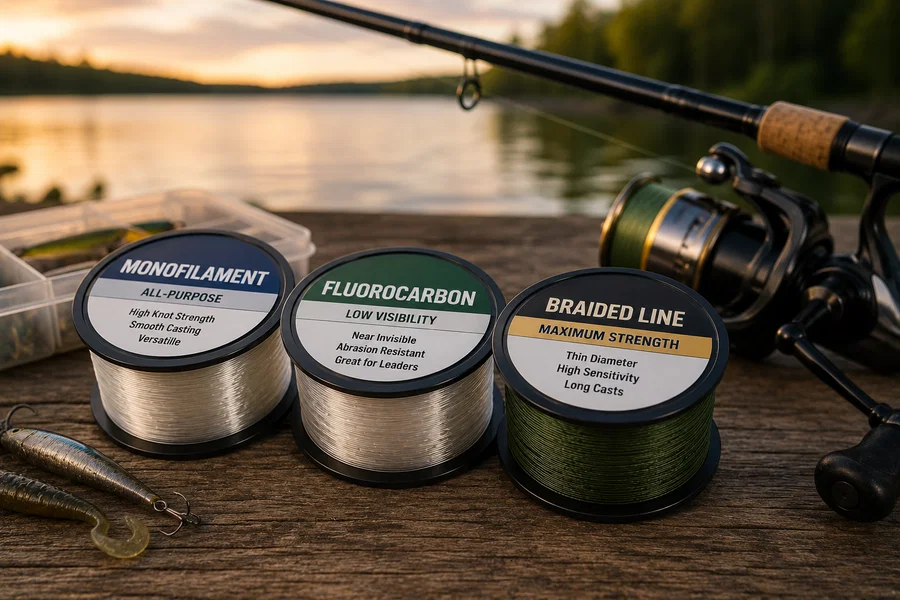
Another factor that many new anglers miss is the type of line. There are three main types: monofilament, fluorocarbon, and braided. Monofilament is great for beginners as it’s easy to handle and has good knot strength. Fluorocarbon is nearly invisible underwater, making it ideal for clear water conditions. Braided line has a high strength-to-diameter ratio, which can be beneficial for casting distance and strength but may require some adjustment in handling.
Many newcomers also overlook the importance of line visibility. If you’re fishing in clear water, a low-visibility line can help prevent fish from spooking away. However, in murky waters, a more visible line can help you see strikes more easily. Understanding the environment you’re fishing in can guide your choice.
Lastly, the line’s memory, or how well it retains its shape, can impact your fishing experience. Some lines, particularly monofilament, can coil and twist over time, leading to tangles. Learning how to manage line twists and curl can save you a lot of hassle on the water.
By paying attention to these details about fishing line, beginners can set themselves up for a more enjoyable and successful fishing experience.
What Makes a Fishing Line Beginner-Friendly#
When you’re just starting out in fishing, the type of line you choose can make a significant difference in your experience. A beginner-friendly fishing line should be easy to handle, forgiving when mistakes are made, and suitable for various fishing environments. Understanding the characteristics that contribute to a line’s ease of use can help you make a confident choice, ensuring that your focus remains on learning the ropes rather than wrestling with complicated equipment.
Ease of casting and knot tying#
When you’re starting out in fishing, the last thing you want is to struggle with your gear while you’re out on the water. That’s why ease of casting and knot tying are crucial factors to look for in a fishing line.
For casting, consider lines that are smooth and have a low memory. Monofilament lines are often a great choice for beginners because they’re flexible and less likely to tangle. When you cast, a line that lands nicely in the water without bouncing back or creating a bird’s nest makes your experience much more enjoyable.
Now, let’s talk about knot tying. As a beginner, you’ll want a line that’s forgiving when it comes to knots. Some lines, like braided or fluorocarbon, can be a bit tricky to tie tightly, which can lead to lost fish. Monofilament again shines here, as it’s generally easier to work with. Simple knots like the improved clinch knot are reliable and easy to learn, making it less frustrating when you’re just starting out.
Remember, the more straightforward your setup is, the more time you can spend focused on fishing rather than fumbling with your gear. Choose a line that prioritizes ease in both casting and knot tying, and you’ll find yourself having a much smoother introduction to the sport.
Forgiveness when mistakes happen#
When you’re just starting out in fishing, mistakes are a part of the learning curve. So, it’s important to choose a fishing line that can forgive those early missteps. A line that’s too sensitive might snap or break easily, leaving you frustrated. On the other hand, a more forgiving line can help you recover from those rookie errors, giving you a better chance of enjoying your time on the water.
Monofilament lines are often recommended for beginners because of their flexibility and stretch. This means if you mistakenly set the hook too hard or get a little too aggressive while reeling in, the line can absorb some of that shock without breaking. They’re also easier to handle, making it simpler to tie knots and manage tangles.
Braided lines, while strong, can be less forgiving. They don’t stretch much, which means a sudden jerk or a bad cast can lead to a snapped line. If you’re just starting out, it might be best to stick with monofilament or even fluorocarbon for a bit. These options will help you feel more confident while you’re learning and allow you to focus on improving your skills rather than worrying about your gear.
Remember, it’s all part of the process. A line that can handle your mistakes will keep you fishing longer and help you build your confidence on the water.
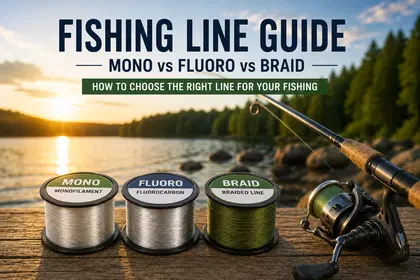
Monofilament: The Best Starting Point for Most Anglers#
When you’re just starting out in fishing, choosing the right line can feel overwhelming. Monofilament fishing line is often recommended as the best option for beginners, and for good reason. It’s user-friendly, versatile, and comes in a variety of strengths and colors to suit different fishing situations. With its stretch and ease of handling, monofilament allows new anglers to learn the ropes without the added stress of complicated gear. Whether you’re casting from the shore or trying your hand at a boat, monofilament gives you a solid foundation to build your fishing skills.
Why mono is easy to learn with#
Monofilament line, often just called “mono,” is a fantastic choice for beginners stepping into the world of fishing. One of its biggest advantages is its flexibility. It’s easy to work with, which means knotting, casting, and handling it doesn’t require a PhD in fishing. You can tie secure knots without much fuss, which is important when you’re just starting out.
Another reason mono is beginner-friendly is its buoyancy. Mono floats on the surface of the water, making it ideal for topwater lures and presentations. This characteristic helps you see how the line behaves and also aids in detecting strikes, especially when you’re still getting the hang of things. If you’re fishing in shallow waters or using lures that need to stay near the top, mono is a solid choice.
Durability is also a plus. While it can get nicked and worn over time, mono generally holds up well against everyday use. It’s resistant to UV rays and can last a decent amount of time if you take care of it. Just remember to check for any frays before you head out.
Cost is something that often matters for beginners, too. Monofilament is usually the most affordable option on the market. This means you can spool up multiple reels or try different line strengths without breaking the bank. Since you’re likely experimenting with different techniques and setups, this budget-friendly aspect is definitely a plus.
Lastly, mono has a bit of stretch to it, which can actually play in your favor when you’re starting out. That stretch can help absorb the shock of a fish taking off, giving you a bit of forgiveness if you’re not yet experienced in setting hooks. This way, you’re less likely to lose a catch due to a sudden rush or jerk.
All in all, monofilament gives you the perfect balance of ease and effectiveness as you learn the ropes of fishing. It’s a reliable companion that helps you focus more on enjoying the experience rather than stressing over your gear.
When monofilament performs best#
Monofilament fishing line is often the go-to choice for beginners, and for good reason. It shines in various situations, making it a versatile option. One of its standout features is its buoyancy, which means it floats on the water’s surface. This characteristic is especially beneficial when you’re fishing with topwater lures, as it allows your bait to sit just right and attract fish effectively.
When you’re fishing in freshwater lakes or rivers, monofilament excels due to its ease of handling. It has a bit of stretch, which can be forgiving when you hook a fish. This stretch helps absorb the shock of a sudden pull, giving you a better chance of landing your catch without breaking the line. It’s perfect for beginners still learning how to control their rod and reel.
Another scenario where monofilament performs well is when fishing in areas with lots of structure, like submerged rocks or fallen trees. Its flexibility and knot strength allow you to tie secure knots, which is crucial when you’re casting near snags. Just make sure to check for any abrasions after fishing, as monofilament can wear down over time.
In terms of visibility, monofilament comes in various colors, which can help match the water conditions. If you’re fishing in clear water, a clear line is less likely to scare off the fish. However, in murky water, a colored line can make it easier for you to see and manage your line, ensuring you’re always ready for a bite.
Overall, whether you’re casting for bass in a quiet lake or trying your luck at a local river, monofilament offers reliability and ease of use that can boost your confidence as you start your fishing journey.
Fluorocarbon: Is It Worth Using as a Beginner#
When you’re just starting out in fishing, choosing the right line can feel overwhelming. Fluorocarbon line often comes up in conversations among experienced anglers, but is it really the best choice for beginners? In this section, we’ll explore the benefits and drawbacks of fluorocarbon, helping you understand if it’s a suitable option for your fishing adventures. Whether you’re casting from the shore or out on a boat, knowing how this line performs can give you confidence as you reel in your first catch.
The benefits of low visibility#
One of the standout features of fluorocarbon fishing line is its low visibility in the water. For beginners, this is a significant advantage. Fish, especially wary species, can be easily scared away by shiny or overly visible lines. When you’re out on the water, every little detail counts, and fluorocarbon helps you stay under the radar.
The refractive index of fluorocarbon is similar to that of water, which means it blends in beautifully. This means that fish are less likely to notice your line, increasing your chances of getting bites. When you’re just starting out, getting a beginner-friendly line that gives you a little extra help can make a big difference in your overall success.
Another practical benefit of low visibility is that it can help you fish in clear water conditions. Many beginner anglers might find themselves fishing in lakes, rivers, or streams where the water is crystal clear. In these situations, a line that remains inconspicuous can help you present your bait or lure more effectively, making it more appealing to fish.
Using a fluorocarbon line also means you can experiment with different techniques without worrying too much about your line giving away your position. Whether you’re trying to finesse a lure to trigger a bite or fishing with live bait, having a low-visibility line allows you to focus more on your technique rather than whether the fish can see your tackle.
Braided Line: Powerful but Not Always Beginner-Friendly#
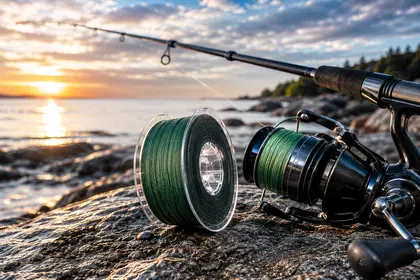
Braided fishing line is known for its strength and sensitivity, making it a popular choice among seasoned anglers. However, for beginners, it can present some challenges. Unlike monofilament or fluorocarbon lines, braided line tends to lack stretch, which means that it can be unforgiving in certain situations.
Understanding its unique characteristics is essential for new fishermen, as it can significantly impact your fishing experience, both positively and negatively. Let’s dive into the pros and cons of braided line to help you decide if it’s the right fit for your fishing adventures.
| Line Type | Beginner Difficulty |
|---|---|
| Monofilament | Easy |
| Fluorocarbon | Moderate |
| Braid | Moderate to Hard |
Why experienced anglers love braid#
Braided line has earned a solid reputation among experienced anglers for a good reason. One of its biggest advantages is strength. Braids are made from multiple strands of material, which gives them incredible tensile strength. This means they can handle larger fish without snapping, which is a huge plus when you’re reeling in that prized catch.
Another reason seasoned anglers gravitate towards braided line is its thin diameter. A thinner line means more line can fit on your reel, allowing you to cast further and deeper into the water. This can be particularly beneficial for targeting species that are more skittish or for fishing in areas with heavy cover.
Braid also has minimal stretch compared to monofilament or fluorocarbon lines. For many anglers, this translates to better sensitivity. You can feel even the slightest nibble on your bait, which is crucial for detecting bites. This sensitivity helps with quick hook sets, increasing your chances of landing a fish.
Additionally, braided lines are highly resistant to abrasion. If you’re fishing in rocky or snag-prone areas, this feature can save you from losing tackle more often than not. It’s tough enough to withstand wear and tear, making it a reliable choice for various fishing environments.
Despite all these advantages, braid may not be the first choice for beginners due to its unique handling characteristics. It can be a bit tricky to tie knots and may require specific techniques to manage effectively. However, once you get the hang of it, many anglers find that the benefits far outweigh the challenges.
Challenges beginners often face#
When starting out with braided fishing line, newcomers often run into a few hurdles that can be a bit frustrating. One of the biggest challenges is the line’s lack of stretch. Unlike monofilament, which has some give, braided line is much stiffer and less forgiving. This means that when you set the hook, you might pull it too hard and miss the fish entirely. It can be a tough lesson in letting the fish take the bait before you strike.
Another issue is the visibility of braided line in the water. Its bright colors can be a double-edged sword. While it helps you see where your line is, it can also scare off fish, especially in clear water. Beginners might want to consider using a fluorocarbon leader attached to their braided line. This way, you can enjoy the benefits of the braid while keeping your leader line less visible.
Then there’s the matter of tangling. Braided lines can tangle more easily than others, especially if not spooled correctly. If you’re not careful, you might end up with a bird’s nest of line that could take a while to untangle. Make sure you spool it onto your reel tightly and check your setup regularly to avoid these messes.
Finally, if you’re not used to it, the sensitivity of braided line can be overwhelming. You’ll feel every little nibble, which is great, but it can also lead to overreacting. Practice makes perfect here - take your time getting used to the feel of the line and learning how to distinguish between fish bites and other underwater movements.
Choosing the Right Line Strength#
When it comes to fishing, the strength of your line can make all the difference in your success on the water. Choosing the right line strength can be a bit overwhelming, especially for beginners, as it depends on various factors like the type of fish you’re targeting and the environment you’ll be fishing in. By understanding line strength and how it relates to your tackle and technique, you’ll be better equipped to make an informed choice that will enhance your fishing experience.
Light line for small fish#
When you’re just starting out in fishing, choosing the right line strength can make all the difference, especially if you’re targeting smaller fish. Light lines are perfect for this, as they allow for better sensitivity and a more natural presentation of your bait.
Light fishing lines typically range from 2 to 8-pound test. If you’re going after species like bluegill, crappie, or small trout, a 4-pound test line is often ideal. This strength is strong enough to handle these little fighters while still being thin enough to not scare them away.
One of the great advantages of using a light line is its flexibility. It can help you feel even the slightest nibble, which is crucial when trying to hook smaller fish. You’ll notice the difference as you become more attuned to those subtle bites.
When spooling your reel with a light line, take care to avoid overloading it. Too much line can create tangles and reduce your casting distance. Additionally, practice tying the right knots, as lighter lines are more prone to slipping if not secured properly. Knots like the improved clinch knot are beginner-friendly and provide a reliable hold.
Lastly, be mindful of your surroundings. Light lines can be more susceptible to wear and tear from snags and rough edges. Always check your line for any frays or damages before casting out to ensure that you don’t lose a prized catch.
Medium line for general freshwater fishing#
When you’re starting out in freshwater fishing, a medium line is a solid choice for most situations. Typically, this means using line with a test strength of around 8 to 12 pounds. This range is versatile enough to handle a variety of fish species, from panfish to bass.
Using a medium line gives you a good balance between strength and sensitivity. It’s strong enough to reel in decent-sized fish without snapping, yet light enough to feel those subtle bites. This sensitivity helps you learn how to detect when a fish is nibbling, which is crucial for beginners.
For general use, monofilament line is often the go-to option. It’s easy to handle, floats well, and has some stretch, which can help absorb the shock when a fish takes off. This stretch can be particularly forgiving if you’re still getting the hang of setting the hook properly.
When spooling your reel, make sure to fill it to about 1/8 inch below the spool lip. This prevents line tangles and gives you better casting distance. If you find yourself fishing in areas with lots of snags or vegetation, consider a braided line, as it’s more resistant to abrasion and doesn’t stretch like monofilament.
In terms of colors, clear or green lines are good choices for most freshwater environments. They blend in with the water, making it less likely for fish to see them. It’s all about giving yourself the best chance at success while you’re learning.
Remember, every fishing trip is a chance to learn, and having the right line can make a big difference as you figure out your technique.
Heavier line for larger species#
When you’re aiming to catch larger fish, like bass, pike, or even catfish, using a heavier fishing line is crucial. These bigger species are known for their strength and the potential for long, thrilling fights. A sturdy line helps ensure you can reel them in without the risk of snapping.
Typically, a line with a breaking strength of 15 to 30 pounds is a good choice for most larger freshwater fish. Monofilament, fluorocarbon, and braided lines all come in heavier strengths, so you have options based on your preference. Monofilament is great for beginners because it’s forgiving and stretches a bit, which can help absorb the shock of a sudden pull. Braided lines, on the other hand, have a thinner diameter and higher strength-to-weight ratio, allowing you to feel everything that’s biting.
When selecting your line, consider the environment you’ll be fishing in. If you’re fishing in heavy cover, like weeds or submerged logs, a heavier line is essential. It will give you the strength needed to pull fish free from snags without breaking. Plus, you’ll want to match your line with your rod and reel setup; a heavier line requires a rod that can handle the weight.
Don’t forget about the type of fishing you’ll be doing. If you plan to go after saltwater species, you’ll want to choose a line designed to withstand the harsher conditions of the ocean, which often means opting for a heavier, more durable option.
Ultimately, selecting the right line strength is about knowing the fish you’re targeting and the environment you’ll be fishing in. Heavier lines give you the confidence to tackle larger fish while ensuring you have the right gear for the job.
Common Fishing Line Mistakes Beginners Make#
When you’re just starting out in fishing, choosing the right line can feel overwhelming, and it’s easy to make a few missteps along the way. Many beginners overlook the importance of matching their line type and strength to their chosen fishing method and target species. Understanding common mistakes can help you avoid frustration and set you up for success on the water. Let’s explore some of these pitfalls so you can reel in your first catch with confidence.
Spooling too much or too little line#
One of the most common mistakes beginners make is spooling their reels with too much or too little fishing line. It might seem like a minor detail, but getting the right amount can significantly affect your fishing experience.
If you spool too much line, you risk creating a messy tangle when casting. This can lead to frustrating moments when you’re trying to reel in a catch. On the flip side, if you don’t have enough line, you might not be able to cast far enough or reach the depths where the fish are biting.
To avoid these pitfalls, start by checking your reel’s line capacity. This information is usually printed on the reel itself or in the manual. A good rule of thumb is to fill the spool to about an eighth of an inch below the spool rim. This gives you enough line for casting while preventing overflows during use.
When you’re spooling your line, take your time. Hold the line under tension as you reel it in to help prevent twists and loops. If you notice any twists in the line, it’s best to remove it and start over. Spooling properly not only makes for smoother casting but also increases your line’s lifespan.
Using the wrong knot#
When you’re starting out in fishing, choosing the right knot can feel overwhelming. There are dozens of knots to learn, but don’t let that intimidate you. Using the wrong knot can lead to lost fish, tackle, and even frustration. It’s a small detail that can make a big difference.
For beginners, the Improved Clinch Knot is a great go-to choice. It’s simple to tie and works well for securing your fishing line to hooks, lures, or swivels. To tie it, start by threading the line through the eye of the hook. Then, wrap the tag end around the standing line about five to seven times. Next, pass the tag end through the small loop you created just above the eye, and then through the larger loop you made by wrapping. Wet the knot slightly before pulling it tight to avoid line damage.
Another solid option is the Palomar Knot. This one is particularly strong and works well for various fishing situations. Start by doubling your line and passing it through the hook’s eye, then tie a simple overhand knot with the doubled line. Before you tighten it, pass the hook through the loop you just made, then pull it tight. This knot is great for both monofilament and braided lines.
Make sure to practice tying these knots at home. Getting familiar with the motions will save you time and frustration on the water. Remember to check your knots regularly while fishing. Even if you tie the perfect knot, wear and tear can weaken it, especially after battling a big fish. If it looks worn or frayed, it’s best to retie it for peace of mind.
Ignoring line maintenance#
When you first start fishing, it’s easy to overlook the importance of taking care of your fishing line. After all, it seems like such a minor detail compared to choosing the right rod or reel. However, neglecting line maintenance can lead to tangles, breaks, and missed opportunities on the water.
One simple habit to adopt is to check your line regularly. Before each fishing trip, look for any signs of wear, such as frays, nicks, or discoloration. If you spot any damage, it’s best to replace that section or even the entire line to avoid frustrations later on. A damaged line can fail at the worst moment, like when you’re trying to reel in the catch of the day.
Cleaning your line is another important step that many beginners skip. Over time, dirt, salt, and other debris can build up on the line, affecting its performance. You can easily clean your line by running it through a damp cloth or using a specialized line cleaner. This will help maintain its strength and smoothness, making it less likely to tangle or snap.
Don’t forget to spool your line properly, too. When you’re reloading line onto your reel, make sure it’s going on in the right direction. If you wind it on incorrectly, it can create twists and knots that will frustrate you while fishing. A good tip is to hold the spool in the same position as the reel to prevent this issue.
Lastly, consider how often you should replace your line. Depending on how frequently you fish and the type of conditions you’re in, you might need to change it every few months or after several trips. If you notice your line isn’t casting as well or is showing signs of fatigue, it’s time for a fresh spool. Taking care of your line might seem like a small task, but it can make a big difference in your overall fishing experience.
Recommended Fishing Line Setups for Popular Species#
When you’re just starting out in fishing, choosing the right line can feel overwhelming with so many options available. However, understanding the best setups for different species can simplify the process and increase your chances of success on the water. In this section, we’ll explore recommended fishing line setups tailored to some of the most popular fish you might encounter, providing you with a solid foundation for your fishing adventures.
Trout and panfish#
When it comes to fishing for trout and panfish, choosing the right line can make a big difference in your success. Both of these species are often found in freshwater lakes, rivers, and streams, making them great targets for beginners.
For trout, a light monofilament line between 4 to 6-pound test is a solid choice. It’s strong enough to handle the fight of a trout but also thin enough to be less visible in the water. Trout can be wary, especially in clear water, so having a line that doesn’t spook them is crucial. Additionally, monofilament has some stretch, which can help absorb the sudden pulls when a trout strikes.
When targeting panfish, such as bluegill or crappie, you can stick with a similar 4 to 6-pound monofilament line. However, some anglers prefer to use a slightly lighter line, like 2 to 4-pound test, especially if they’re fishing in heavily pressured areas. Panfish are often smaller and less powerful than trout, so you don’t need heavy line for them.
Another great option is fluorocarbon line, which is less visible underwater than monofilament. A 4 to 6-pound test fluorocarbon line works well, especially when fishing in clear water. It sinks faster, which can be beneficial when you want your bait to get deeper quickly. Just keep in mind that fluorocarbon can be less forgiving when it comes to knots; make sure to tie secure knots to prevent losing your catch.
Regardless of the line type you choose, consider using a light rod and reel combo to enhance your experience. A medium-light spinning rod paired with a reel that holds a 2000 to 2500 size line is perfect for both trout and panfish. This setup not only feels good in your hands but also gives you the sensitivity needed to detect light bites from these fish.
Don’t forget about the importance of your leader line as well. If you’re using braided line, consider adding a 2 to 4-foot section of monofilament or fluorocarbon as a leader. This helps with stealth and can prevent line breakage when fighting a fish.
Ultimately, the right fishing line setup will help you enjoy your time on the water while increasing your chances of reeling in some great catches.
Bass and Walleye#
When targeting bass and walleye, choosing the right fishing line can make a significant difference in your success. Both species are popular among anglers, and understanding their preferences helps you select the best setup.
For bass fishing, a good choice is a monofilament line. A 10 to 15-pound test line is often recommended. Monofilament is forgiving, which means it stretches under pressure, helping to absorb sudden pulls from a feisty bass. It’s also relatively easy to handle, making it a great option for beginners. You can use it with a variety of baits, from topwater lures to soft plastics. Just remember to check your line for any nicks or abrasions after each fishing trip, as bass can be quite aggressive.
If you’re looking to target walleye, consider using a braided line, typically around 10 to 20-pound test. Braided line is thinner and stronger than monofilament, allowing you to feel even the slightest bites - something especially useful for walleye fishing where a subtle touch can make all the difference. Pair it with a fluorocarbon leader for added invisibility in clear water. This combination provides sensitivity and strength while reducing the chance of spooking those wary fish.
Both species can be caught at various depths, so adjust your line setup according to the fishing conditions. Ideally, carry a couple of different types of lines in your tackle box. This way, you can easily switch depending on whether you’re fishing in heavy cover for bass or in clearer, deeper waters for walleye.
Catfish and inshore saltwater fish#
When it comes to fishing for catfish and inshore saltwater species, the right line can make a big difference in your success. Both types of fishing require sturdy setups, but they have some distinct needs.
For catfish, you’ll want a strong, abrasion-resistant line. Monofilament line in the 15 to 30-pound test range is a solid choice. Monofilament stretches a bit, which can help absorb the sudden pulls when a big catfish is on the line. Many anglers also prefer braided line for its sensitivity and strength. A 30 to 50-pound braided line can help you feel those subtle bites while giving you the power needed to haul in larger fish. Just remember, if you go the braided route, you might want to add a monofilament or fluorocarbon leader to help with abrasion resistance near the bottom where catfish like to hide.
Inshore saltwater fishing typically involves species like redfish, flounder, and striped bass. Here, a braided line of 20 to 40-pound test is often recommended. Braided lines are thinner for their pound test, allowing you to spool more line onto your reel, which can be beneficial when you’re working areas with structure like rocks or jetties. Pairing this with a fluorocarbon leader helps with invisibility in clear water, which can be crucial since saltwater fish can be more line-shy.
Whether you choose monofilament or braided line, make sure to pay attention to your reel’s drag settings. Catfish can be powerful fighters, and inshore species can dart under structures, so having a properly adjusted drag can prevent line breakage. Remember that the type of knot you use to connect your line to hooks or lures is just as important; a strong knot will keep everything secure when you’re reeling in that trophy catch.
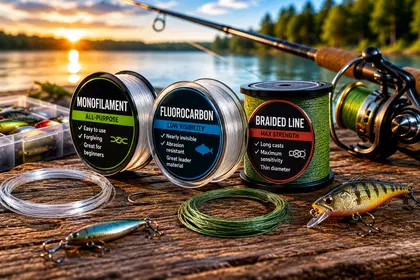
Which Fishing Line Should You Buy First#
Choosing the right fishing line can feel overwhelming for beginners, with so many options available. However, understanding the basics of fishing line types and their uses can simplify your decision. Whether you’re planning to fish in freshwater or saltwater, knowing what suits your style and target species will help you make an informed choice and set you up for a successful day on the water.
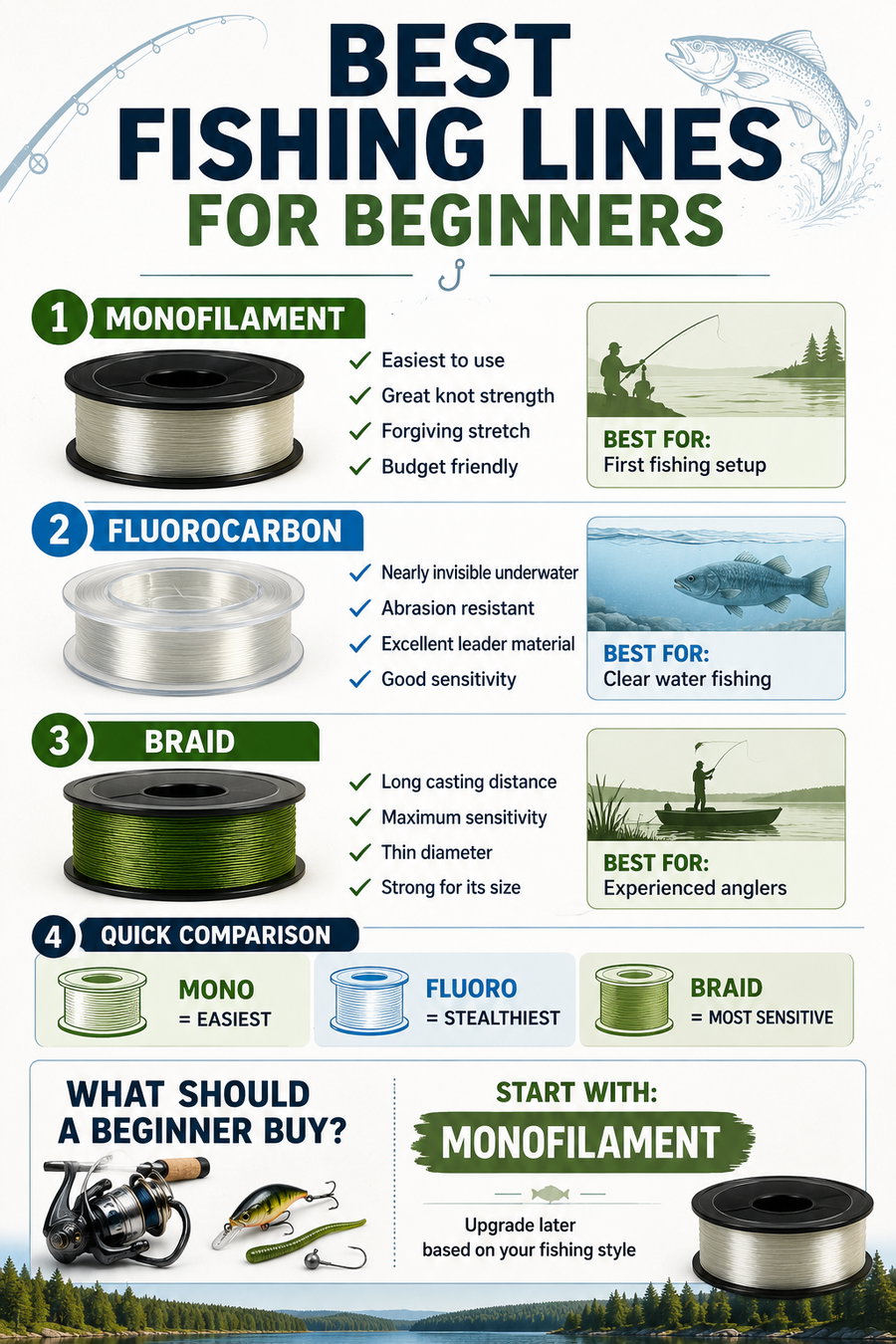
Choosing the right fishing line as a beginner can feel overwhelming, but it doesn’t have to be. By understanding the differences between monofilament, fluorocarbon, and braided lines, you can make more informed choices tailored to your fishing style and the species you’re targeting. Remember, starting with a reliable monofilament line is often the best bet; it’s forgiving and easy to work with, allowing you to focus on honing your skills. Avoid common pitfalls by paying attention to line strength and maintenance. As you gain experience, you can experiment with other types that might suit your evolving needs. So, gear up, get your line sorted, and enjoy the adventure that awaits you on the water. Happy fishing, and may your next catch be a memorable one!